How to speak to the camera when recording an online course
Recording an online course and wondering how to speak to the camera to keep viewers engaged? Learn proven techniques for working with the lens and your voice.
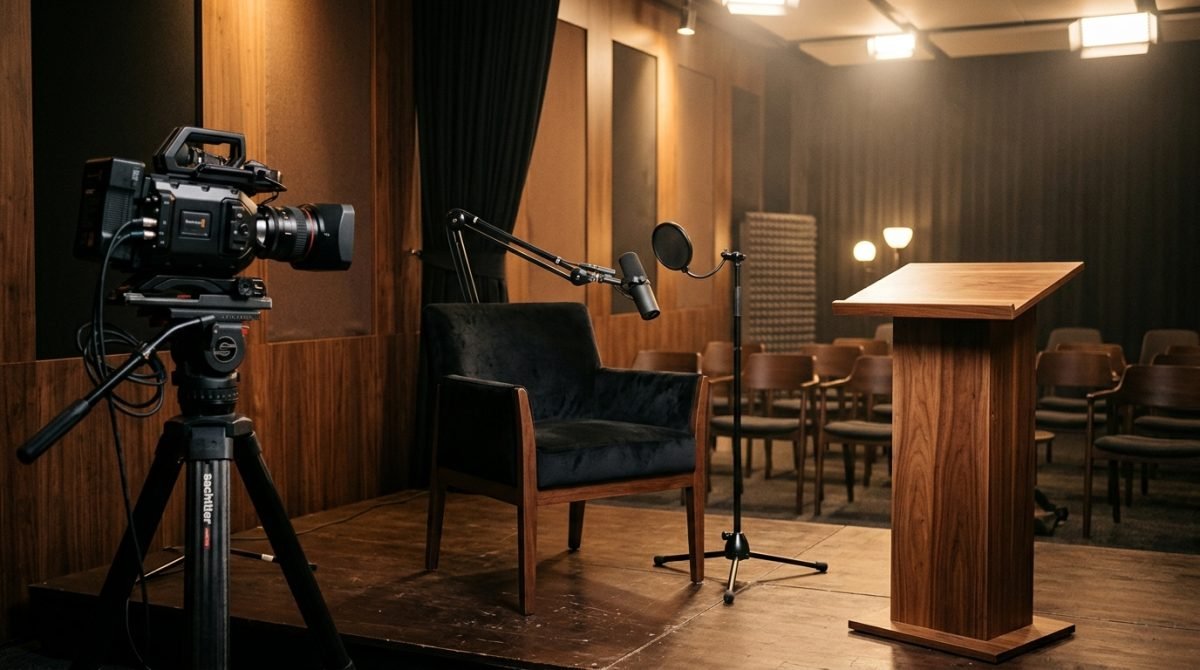
An autumn Thursday morning in the studio, the lights are already warmed up, and an expert stands in front of the lens. They do great live, but suddenly stiffen up once the recording starts. How do you speak to the camera when recording an online course so the viewer doesn't fall asleep after three minutes? The key is dividing the material into short, digestible blocks and treating the lens like a single listener, not a nameless crowd.
Before you stand in front of people
Before you stand in front of the people gathered on the other side of the screen, you need to master the structure of your speech. The camera does not forgive digressions and a lack of a plan. A viewer watching a course at home has plenty of distractions, so your job is to make it easier for them to focus.
- Divide your knowledge into modules lasting from three to seven minutes.
- Write down only the most important things in bullet points instead of memorizing the text.
- Take care of your diaphragmatic breathing even before turning on the equipment to avoid running out of breath mid-sentence.
- Prepare a glass of still, room-temperature water.
How to speak to the camera to keep attention
Preparation itself is just the beginning. When the red light turns on, you must take control of the frame. Here is how to speak to the camera so your message is clear and engaging.
First, watch the axis of the lens. Look exactly into the center of the lens. When your eyes wander to the preview monitor, the viewer gets the impression you are looking down or avoiding contact.
Second, use sentence stress. Highlight the most important words in the sentence with your voice. Monotony is the biggest enemy of online courses. If you say everything on one note, the listener will quickly lose interest.
Third, get comfortable with pausing. Give the listener time to process the information. Stopping after an important point builds tension and allows you to take a calm, deep breath.
Most common mistakes
A lack of experience often results in habits that ruin the reception of the material. I see this regularly while working on set.
The first mistake is reading from a teleprompter without intention. The text sounds flat, and the eyes dart from left to right. The fix is to treat the text on the screen like notes, not a verdict. Change your pace, use facial expressions, and read in full phrases.
The second mistake is overstimulating with gestures. Waving your hands close to your face distracts from your words. The fix is simple, just limit your hand movements. In a tight frame, every gesture seems twice as big, so keep your hands in the chest area and use them only to emphasize key thoughts.
The third mistake is the lack of a smile at the opening. A tense face immediately builds distance. The fix starts even before the take. Before you start speaking, relax your facial muscles. A slight smile at the start sets your voice tone to be warmer and more approachable.
How to practice this
Mastering these elements requires regularity. You can start working on your craft today in your own home.
On Monday and Tuesday, record a one-minute summary of your day with your phone. Watch it without sound and check if your face expresses any emotions. Pay attention to where your eyes wander.
On Wednesday and Thursday, read a fragment of an industry article out loud. Take conscious, two-second pauses after every period. Focus on starting the next sentence with new energy after the pause.
On Friday, talk about a complex problem from your field while looking continuously into your phone's lens for two minutes. See how difficult it is to maintain eye contact with an inanimate object.
Home rehearsals provide a solid foundation. However, when you feel you need a professional environment, working in a real studio makes a difference. At my training sessions in Warsaw, we record material, analyze it frame by frame, and repeat takes until the eye and voice start cooperating with the camera.
Recording a course is a process where technique must give way to the relationship with the viewer. When you stop fighting the equipment, you will simply start teaching.
Questions and answers
Do I have to look into the lens the entire time during the lesson?
No. A natural, brief look away to gather your thoughts is fine, but always return to the lens for key points.
What should I do if I make a mistake during a long take?
Take a longer pause, take a breath, and repeat the entire sentence from the beginning. This will make editing the footage easier later.
How do I avoid a dry throat during recordings?
Take small sips of room-temperature water between takes. Avoid coffee and strong tea right before going on set.