How to speak to the camera to sound natural
Fall speaking season is a great time to train. Learn how to speak to the camera to sound natural. Discover exercises for breathing, pausing, and teleprompters.
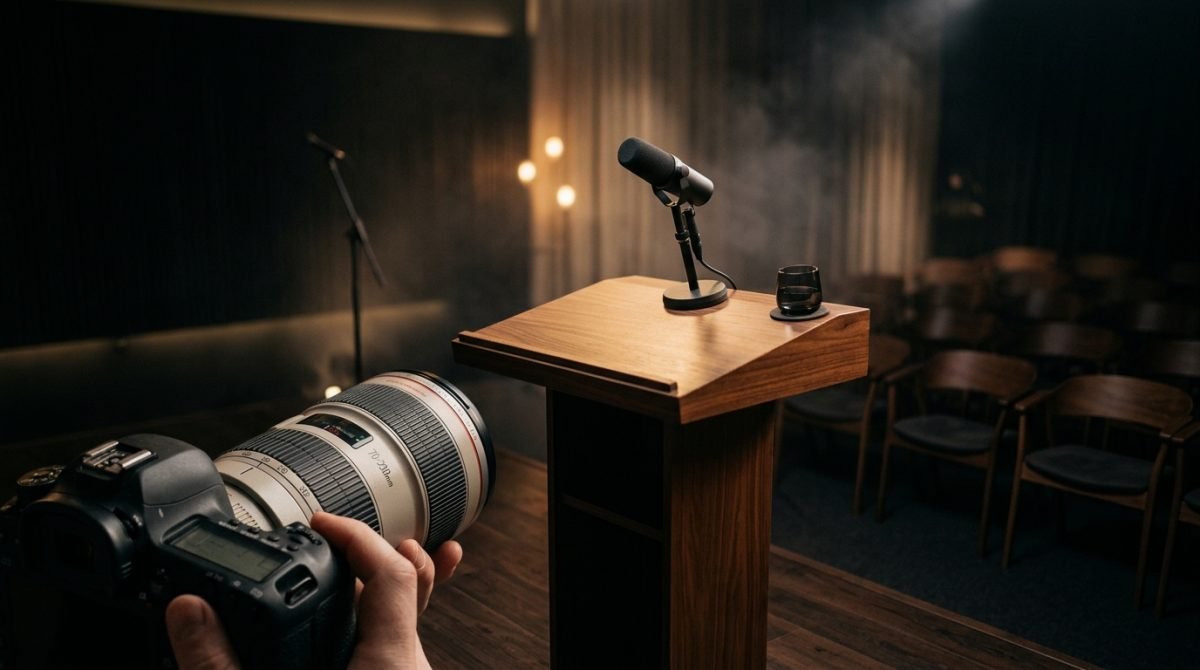
Monday morning. Fall is clearly visible outside the window, and calendars are filling up with upcoming conferences, discussion panels, and industry video recordings. I enter the studio. An expert in his field sits on the chair. The red light goes on, and he suddenly freezes. His voice becomes flat, his posture stiffens. You are probably wondering how to speak to the camera to avoid this. The answer comes down to one rule. You stop playing a presenter and start talking to a specific person on the other side of the glass.
Before you stand in front of people
Preparation is the foundation. Regardless of whether you are facing an investor pitch, a thesis defense, an important online job interview, or recording the next YouTube episode, your body and mind must know what to do. Improvisation rarely works for people who are just building their confidence in front of the lens.
- Set an intention. Decide what the viewer should remember from your statement. Write it down in one simple sentence.
- Write a text for speaking, not for reading. Use words you use every day. Short sentences work best.
- Warm up your speech apparatus. A few minutes of humming, massaging your cheeks, and stretching your lips removes tension from your face.
- Take care of your breathing. Breathe using your diaphragm. This provides stable support for your voice and effectively calms your heart rate before starting.
- Practice your diction. Pronouncing consonants clearly means the recipient does not have to guess the words. Read a paragraph of text with a wine cork placed between your teeth.
- Do a dry dress rehearsal. Read your material out loud while standing in front of a mirror. Pay attention to where you run out of breath.
How to speak to the camera in practice
Working in front of the lens is a craft. When I host a program on air, I do not think about the thousands of viewers in front of their TVs. I look into the center of the lens and imagine one person. It could be a friend, a client, or a coworker. You should find someone like that too.
Eye contact is key. The axis of the lens is your interlocutor's eyes. Looking away to the sides, ceiling, or floor reveals uncertainty and distracts the recipient. Focus your eyes on one point.
The second issue is pacing. Out of nerves, we start to rush. We want to convey the information as quickly as possible and escape the set. Take a pause. Suspend your voice. This gives the viewer time to process the information, and you time to take a calm breath. Silence in the frame can resonate stronger than a flood of words.
Body posture affects how your voice sounds. A hunched back squeezes the diaphragm. A blocked diaphragm means shallow breathing and a trembling voice. Straighten up, but stay relaxed. Shift your center of gravity slightly forward. This is a signal to the brain that you are ready for action.
Often on set, we use the help of text displayed on the glass. Reading from a teleprompter: sentence accent, pausing, interpretation - you sound like yourself. This requires practice, but it allows you to maintain constant eye contact without losing your train of thought. You focus on the message, not on remembering the next paragraph.
Remember to gesture. Your hands should work naturally, supporting what your speech apparatus is saying. Holding them stiffly along your body blocks expression. Let your hands tell the story with you by keeping them at chest level.
Most common mistakes
During training sessions, I see repeating patterns. Catching them is half the success.
Lack of pausing and rushing through the material. You speak on one breath until you run out of air. The voice becomes squeaky, and the message is unreadable. Correction: a period in the text is a place for a calm breath. Give yourself the right to be silent between sentences.
Stiff posture. You sit tensely, and your shoulders travel right up to your ears. Correction: rest your feet flat on the floor. Lean slightly toward the camera. This builds engagement and opens your chest.
Fake smile. You paste a grimace on your face. Correction: smile with your eyes and intention, not just your lips. Be consistent with the topic you are talking about.
Wandering eyes on the monitor. You look at the preview of your face instead of into the lens. Correction: cover the preview screen or turn it around. Look only into the glass.
Monotony in the voice. You treat every sentence the same. Correction: use sentence accent. Highlight the most important words in the sentence with your voice. Change the pace.
How to practice this
Skills require repetition. Plan a simple week of work at home. A regular smartphone is enough for these exercises.
On Monday, turn on the recording on your phone. Talk about your day for a minute. Watch the footage without sound and observe your body. See what your hands are doing and how your head is positioned.
On Tuesday, do the same, but focus on finishing sentences clearly. Do not swallow the endings. Let every word resonate to the end.
On Wednesday, add a longer pause after an important thought. Count to two in your head before starting the next sentence.
On Thursday, record the text while trying to keep your eyes on the lens for the entire sixty seconds. Without a single blink to the side.
On Friday, combine all these elements. Record a short, two-minute statement on a topic related to your work.
Home exercises provide a solid foundation. However, there comes a time when studio training makes a difference. Working with three cameras, professional studio lighting, broadcast microphones, and analyzing the footage sentence by sentence with a director on set reveal details that a phone simply will not catch. In my studio in Warsaw, we always start with an entry recording. Then we work on the material and do an exit recording. We repeat the iterations until it starts working out, and the participant always takes their files home.
The camera is just a device that records your thoughts. Treat it like a conversation partner, and naturalness will appear faster than you assume.
Questions and answers
Can you learn to speak to the camera if you are very stressed?
Yes, working in front of the lens is a craft, not a talent. Mastering diaphragmatic breathing and preparing the text well significantly lower stress levels.
How long do you need to practice to see the first results?
The first changes can be seen after just a few days of conscious work recording yourself with a phone. Full fluency requires regular repetition and recording analysis.
Is reading from a teleprompter difficult for beginners?
It requires mastering the technique, proper pacing, and accentuation. However, after a few iterations in the studio, it allows you to maintain constant eye contact and focus on the message.