Personal Brand on Video: How Much Time to Plan in the Studio?
Building your image and interested in a personal brand on video? Find out how to plan your studio time, avoid mistakes, and prepare for recording.
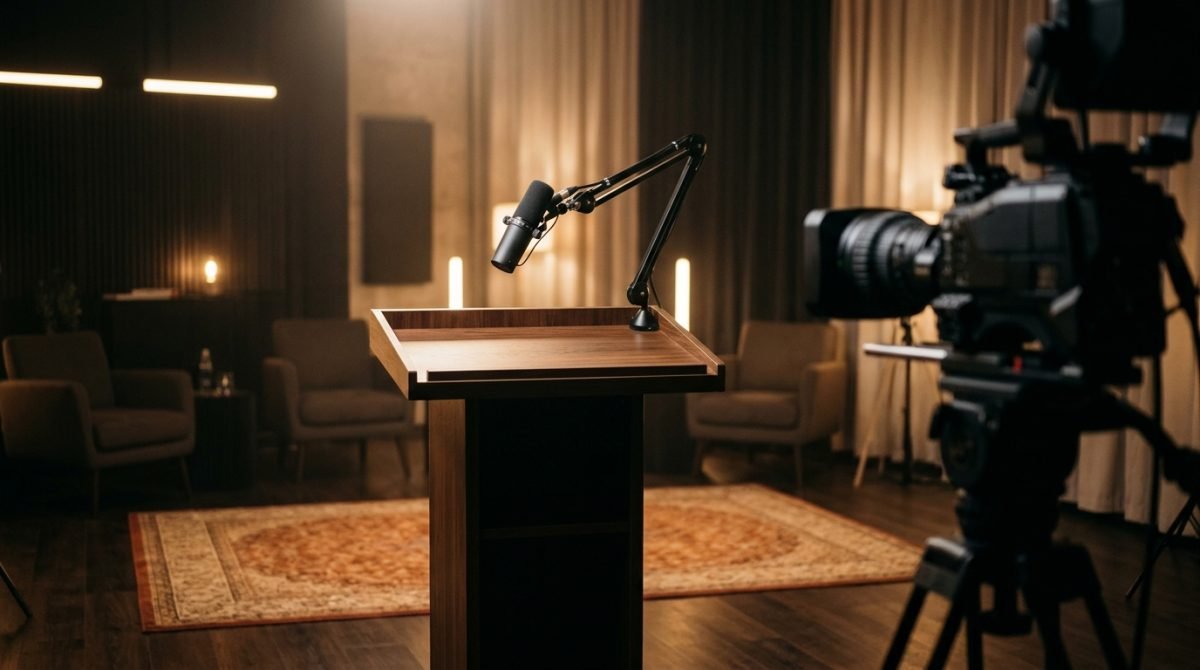
An autumn Thursday is the moment when many companies start planning their annual summaries. Soon, presentations of results to management boards will begin, and some of these reports will take the form of a video. You enter a studio rented by the hour, the clock mercilessly counts down the minutes, and after 45 minutes you have recorded only two usable sentences. This is a common picture I observe from behind the lens. How much time should you plan for such a session? The answer depends on your skills and preparation. For a beginner, one minute of finished, edited material is often thirty to forty minutes of craft work on set. Your personal brand requires space, and haste is a bad advisor in front of the camera.
Before you stand in front of people
Before you stand in front of the people who will watch your recording, you have to do the work at home. The camera exposes every lack of preparation. The body tenses up in a fraction of a second, breathing becomes shallow, and the voice loses its natural resonance. To avoid this, you need a hard, technical action plan.
- Write a script and read it aloud, marking places to inhale with a pen.
- Measure your reading time with a stopwatch and slow down your natural pace by twenty percent.
- Prepare clothes that do not restrict your chest and allow your diaphragm to work freely.
- Plan a large time buffer for possible failures and retakes.
Personal brand on video step by step
Image building is a process based on details. A strong personal brand relies on the consistency of what you say with how you look and sound. When you enter the studio, you always lose the first few minutes to acclimatization. The producer sets up the backlights, clips on the lavalier microphone, and checks the audio levels. You have to get used to a new, technical space. I see this regularly during my training sessions in a Warsaw studio. A participant stands in front of three cameras, we turn on the studio lighting, and we start the teleprompter. Even experienced CEOs need a moment to lower their heart rate. We record the initial material, analyze it sentence by sentence, and then repeat the shots. Only after a few iterations does the body release tension, and the voice settles lower. In a studio rented by the hour, you rarely have a coach next to you, so you have to manage your state yourself. Focus on the axis of the lens. That is where your audience is. Rest your body weight evenly on both feet, avoiding swaying from side to side. Make eye contact with the black lens of the camera and treat it like the eyes of a specific person you are directing your message to.
Most common mistakes
Working on a film set is governed by strict rules. A lack of experience is easy to recognize by a few repetitive patterns that affect the final result.
Booking time with no margin. You rent a studio for an hour, having ten minutes of difficult, industry-specific text to record. Correction. Always add half the time for unforeseen situations, equipment failures, reading errors, or a simple dry throat.
Lack of vocal warm-up. You go on set with an un-warmed voice, which makes your diction unclear, and the endings of words slip away. Correction. On the way to the studio, do a simple humming exercise, massage your jaw, and take a few deep diaphragmatic breaths.
Looking away at the preview monitor. You want to control your appearance, so you look at the screen instead of the lens. Correction. Ask the producer to turn the monitor away or turn it off completely, because the axis of the lens is the only place to focus your eyes.
Stopping after every mistake. You mess up one word and immediately interrupt the shot, starting the whole paragraph from the beginning. Correction. Take a longer pause, take a calm breath, and repeat only the ruined sentence, and the editor will easily combine it into a coherent whole.
How to practice this
On-camera skills are built through repetition and conscious work with the body. Before you pay for renting a professional studio, do the work at home. Here is a plan for the coming days that will prepare you for recording.
Monday. Prepare a short, one-minute text. Divide it into logical blocks and mark places for pauses and sentence stress with slashes.
Tuesday. Read the text aloud several times, focusing solely on clearly accentuating the endings of words and maintaining an even breath.
Wednesday. Set your phone on a tripod exactly at eye level. Record a few attempts, making sure your eyes do not wander away from the lens and your posture remains open.
Friday. Play back the recordings with the sound turned off. Observe your posture, hand movements, and facial muscle tension. Check if your body sends the same signals as the spoken text.
Sunday. Record the final version. Apply all the corrections from the previous days. You will see a clear difference in your confidence and freedom of delivery.
Working in front of the camera is a craft that requires patience and an appropriate margin of error. Reserve enough time, and stress will give way to full focus on the message.
Questions and answers
Do I have to memorize the text before entering the studio?
There is no need if the studio has a teleprompter. However, you should know the structure of your speech well and practice reading aloud to sound natural.
How do I deal with a dry throat during recordings?
Drink room-temperature water in small sips during breaks. Avoid coffee and strong tea right before going on set.
What should I do when stress paralyzes me right in front of the camera?
Focus on a prolonged exhale and conscious diaphragm work. Treat the lens like the eyes of one friendly listener, instead of thinking about a massive audience.