Motivational Speaker or Expert: Who Do You Want to Be on Stage
Wondering who is a motivational speaker and who is an expert on stage? See how to build authority with your voice and body to win over your audience.
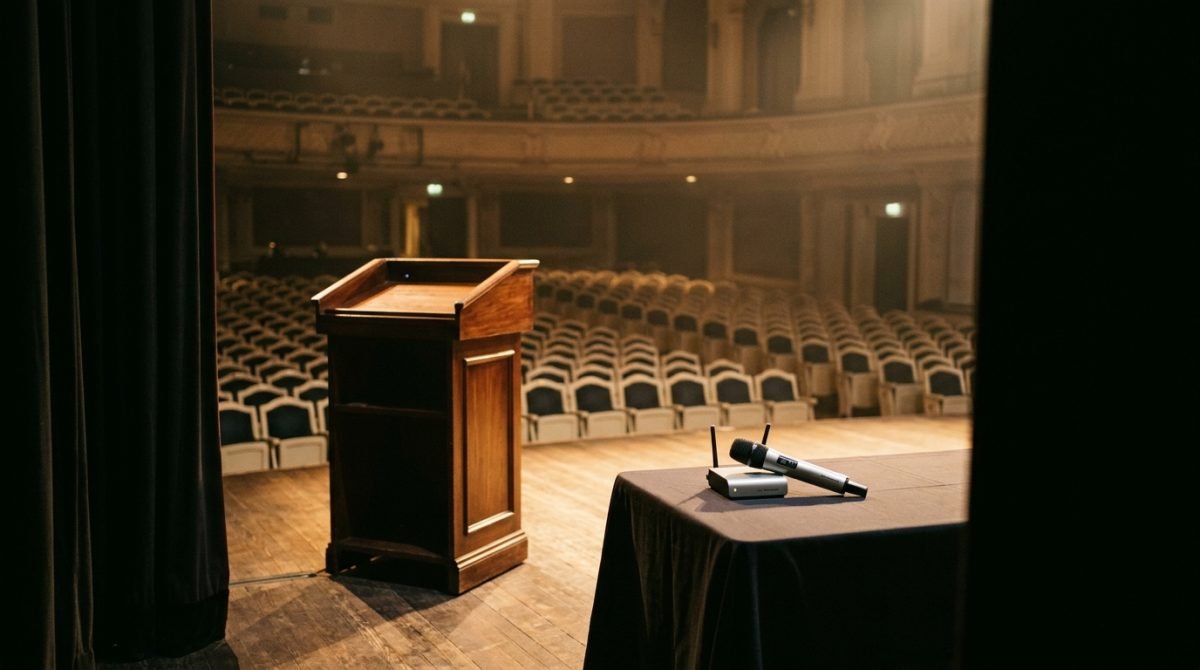
An autumn Sunday morning is a good time to calmly look over your notes before an important Monday presentation. I often see people in the training room trying to imitate someone else's style and losing themselves in the process. The answer to the question of whether a motivational speaker or a subject matter expert is better comes down to one thing. On stage, on camera, or at a job interview, only the person who knows their craft and speaks with their own voice will succeed.
Before you stand in front of people
Before you step into the spotlight or sit across from a recruiter, you must decide on the format of your message. I have seen many guests in the television studio who had extensive knowledge, but their bodies sent mixed signals. During a thesis defense or an investor pitch, the committee evaluates not only your slides but, above all, you. How you enter the room, how you sit down, and how you start speaking sets up the entire conversation. Preparation is not just about writing down bullet points. It is about organizing in your head how you want to be perceived by the audience. We start with the foundations that build your position on stage before the first word is even spoken.
- Determine one main goal for your speech and write it down in one simple sentence.
- Check who you are talking to and adjust your language to them, eliminating industry jargon.
- Practice the first three sentences out loud to calm your breathing and get into the right rhythm.
- Decide exactly where you will look in the first few seconds after stepping on stage.
- Plan your hand position for the moment when you are silent and listening to questions.
Motivational speaker vs. expert: steps to a consistent message
The difference between these two attitudes lies in the proportions between emotion and fact. A motivational speaker often relies on higher energy, dynamics, and a faster pace. An expert allows space for a longer pause and settles their voice lower, building authority with calmness. Regardless of which direction you take during a thesis defense or a pitch to the board, you must master the basic tools.
Step one is conscious breathing. We always start with the work of the diaphragm, because that is where the strength of your message comes from. When stress tightens your throat, your voice becomes flat, thin, and loses its carrying power. Take a low breath, feel your lower ribs expand. This provides support for the sound and allows you to speak longer without getting out of breath. A well-supported voice immediately positions you as someone aware of their competence.
Step two is eye contact and posture. When you speak to the camera, you look straight into the lens axis, without letting your eyes wander to the sides. When you are on stage, you choose one person in the audience and finish an entire thought looking at them. Then you calmly shift your gaze to the next person. Wandering your eyes across the ceiling or floor takes away your credibility and reveals nervousness. Your feet should be hip-width apart, giving you a stable foundation.
Step three is a clear structure. Public speaking craft: message construction, opening, punchline, and controlling stage fright are elements that build your self-confidence from the inside. When you know exactly where your speech is heading, your body calms down on its own. The listener needs a map that you will guide them through. If you start to wander, you will lose their attention.
Most common mistakes
On set and during training sessions in my studio, I see recurring patterns. They are easy to eliminate if you know what to pay attention to before your next appearance in front of people.
Lack of pauses. Out of nerves, you speed up, blending sentences into one long string. You are afraid of silence, so you fill it with thinking sounds. The fix: after every important thought, close your mouth for two seconds. Give the listener time to process the information, and yourself time to take a calm breath.
Overstimulation with gestures. Your hands fly in all directions, distracting from the spoken words. Your body does not support the message, but competes with it. The fix: rest your hands naturally at waist level. Use a gesture only when you want to visually emphasize a specific word or direction.
Bad sentence stress. You raise your intonation at the end of an affirmative sentence, making it sound like a question. This subconsciously communicates a lack of preparation. The fix: place a period with your voice. The last word in the sentence should clearly drop down, settling on a hard sound.
Apologizing for flaws. You start your speech by explaining technical problems, lack of time to prepare, or a hoarse voice. The fix: just start saying what you have to say. The viewer evaluates what they see here and now, and your explanations only lower the rank of the speech.
How to practice this
Working on public speaking is a process of repetition, analysis, and drawing conclusions. You can start this training today, in your own home, without specialized equipment. It only requires a bit of discipline.
On Monday, record a one-minute speech on your phone about a topic you know well. Set the frame at eye level. Do not delete the recording, even if you do not like it. On Tuesday, watch the footage without sound. Pay attention to what your body is doing, where your eyes wander, and what your hands are doing. Write down your observations. On Wednesday, listen to the sound alone by turning the phone screen away. Count how many times you take a shallow breath, whether you make pauses, and whether you place periods at the end of sentences.
On Thursday, write your opening and punchline on a piece of paper. On Friday, say them to the mirror, making sure that the last word in the sentence drops down. Repeat this until you feel relaxed in your body.
Home exercises give you a lot of body and voice awareness. However, there comes a moment when you need an objective eye and conditions similar to your target ones. That is when training in a working studio makes a difference. Working with three cameras, professional lighting, broadcast microphones, and a teleprompter allows you to test your expectations against reality. An initial recording, precise sentence-by-sentence feedback, and a final recording show where you really are and what you need to work on. The director on set ensures that the environment is demanding but safe.
Ultimately, on stage, it does not matter much what label you attach to yourself at the beginning of your journey. What matters is whether you can hold the viewer's attention and leave them with a clear, valuable message.
Questions and answers
Is it possible to completely eliminate stress before a speech?
Stage fright before a speech never completely disappears, but you can control it. Good structural preparation and working with diaphragmatic breathing allow you to turn stress into full concentration.
How long do you need to practice to look good on camera?
It depends on your starting point and consistency. Recording short videos on your phone every day allows you to notice the first changes in your voice and posture after just a few weeks.
Is reading from a piece of paper on stage a mistake?
A piece of paper with the full text often cuts us off from the audience and ruins eye contact. It is better to prepare short bullet points that will only act as a signpost for your thoughts.