How to master difficult questions after a presentation?
See how to answer difficult questions after a presentation, defense, or pitch. Learn voice and body techniques that build calmness and authority.
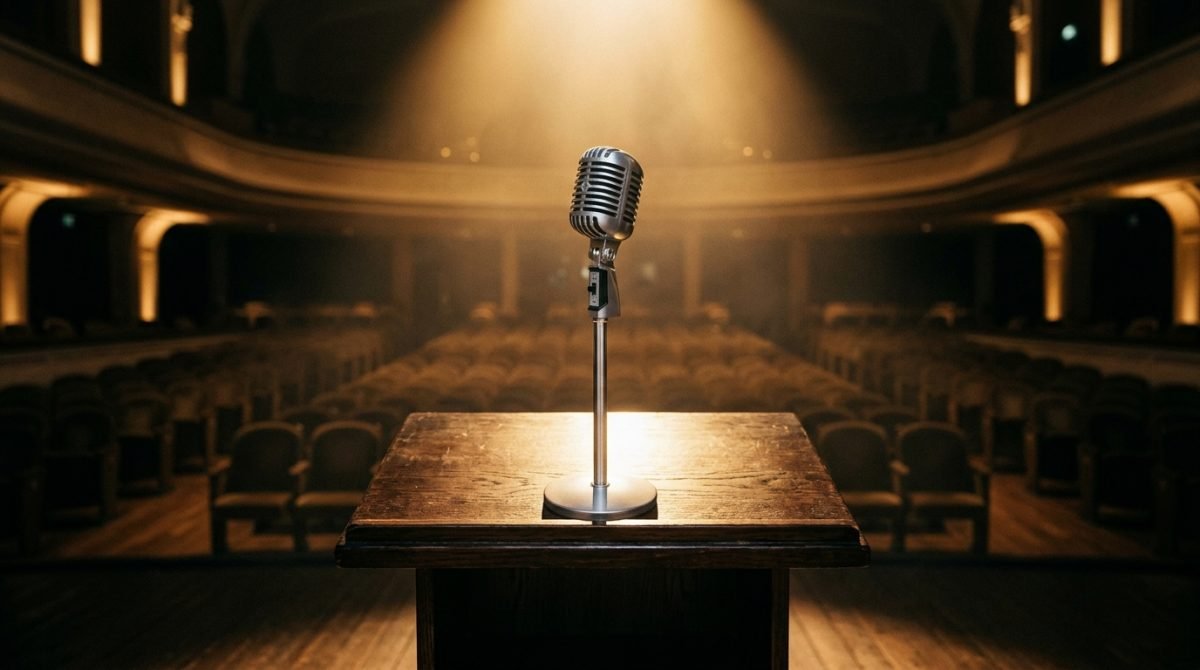
A Sunday autumn evening is the moment when the script for a Monday presentation starts coming together in my head. I see a speaker in the conference room who smoothly goes through the slides but stiffens when the first question from the audience is asked. His shoulders go up, his breathing becomes shallow, and his eyes dart toward the screen. Answering difficult questions after a presentation requires a pause, lowering the voice, and maintaining eye contact with the questioner before the first word is spoken.
Before you stand in front of people
Preparation for a Q&A session starts long before stepping onto the stage. Often, while writing the text, I intentionally leave information gaps in it. These are places the listener will naturally ask about. Because of this, I have a ready answer for at least the first two issues, which builds my calm from the first minutes of the discussion.
- Write down the three weakest points of your project and prepare short, factual answers for them.
- Establish with yourself what you don't know, and learn to say it out loud in front of a mirror.
- Physically prepare your body to receive questions by resting your weight evenly on both feet and not crossing your arms.
When you stand steadily, your voice gains confidence. The diaphragm has room to work, and air flows freely through the vocal cords. Words about a lack of data or the need to clarify sound natural when you say them out loud a dozen times beforehand in safe conditions.
How to take difficult questions after a presentation
When an uncomfortable question is asked, the body reacts with tension. The diaphragm blocks, breathing becomes shallow, and the voice goes up. The first step is to physically stop this reaction. I take a deep breath and make a two-second pause. This gives me time to assess the situation and calm my heart rate. Silence works to your advantage.
The second step is paraphrasing. I repeat part of the question in my own words. I gain more seconds and make sure I understood the intention correctly. Sometimes what sounds like an attack from the perspective of the stage is just poorly phrased curiosity from the listener.
The third stage is the actual answer. I start with the core. I don't talk about the genesis of the problem unless the listener won't understand the main conclusion without these facts. If the topic is complex, I divide the answer into two points. I speak noticeably slower than during the presentation itself. A slow pace is a signal of control over the situation.
The fourth step is closing. After giving the answer, I shift my gaze from the questioner to the rest of the room. I give a physical signal that the topic has been exhausted and I am ready for the next person.
These are exactly the mechanisms of behavior under pressure that we practice in the studio. If an important professional moment awaits you, pitch training works well: an investor pitch, thesis defense, job interview, board presentation - a simulation in front of the camera and sentence-by-sentence feedback. Working on live material allows you to catch micro-tensions that cannot be seen in a mirror.
Most common mistakes
On set and during speeches, I often see speakers tripping themselves up during the Q&A session. Instead of building authority, they lose it in a few seconds through bad body and language habits.
Interrupting the questioner. It stems from the desire to quickly defend one's point. It causes chaos and escalates tension in the room. The fix is to let the person finish, take a breath, and only then start speaking.
Looking away at the ceiling or floor. The body seeks an escape from stress this way, which the audience reads as a lack of confidence. The fix is to look into the eyes of the person asking the question at the beginning, and during the answer itself, sweep your gaze across the entire room.
Starting with a word of denial. This builds a wall between you and the audience. The fix requires starting with a neutral statement or going directly to the facts.
Rambling and losing the thread. Stress accelerates the speaking pace and forces you to provide unnecessary details. The fix is to put a period. Answer in one, maximum two sentences and make a clear pause.
How to practice this
The ability to answer under pressure is built at home by repeating specific movements. I suggest a simple plan for the coming week.
On Monday and Tuesday, record your presentation on the voice recorder on your phone. Listen to it and note the places where you yourself would have doubts. On Wednesday, ask someone close to you to listen to your speech and ask three mean questions. Tell them not to spare you in their choice of words.
On Thursday and Friday, answer these questions in front of your phone's lens. Pay attention to what your hands are doing and how high your voice sounds in the first seconds of the answer. See if you can keep your eyes on the lens.
Independent work with a phone gives a lot. You can see nervous movements and hear the trembling of the voice on it. However, when the stakes rise, working in studio conditions with three cameras, lighting, and a director allows you to feel real pressure. Recording at the start, working on the material, and recording at the end show in black and white how the posture and sound of the voice change after correction.
A Q&A session is not an interrogation, but a natural extension of your speech. A calm reaction to difficult issues builds authority more effectively than a flawlessly recited text from a teleprompter.
Questions and answers
What should I do when I don't know the answer to a question?
Say directly that you don't have this data right now. Declare that you will check the information and get back with an answer after the meeting.
How should I react to an aggressive tone from the questioner?
Lower your voice and slow down your speaking pace. Answer only the substantive part of the question, ignoring emotional provocations.
Is it worth prompting questions from the audience yourself?
Yes, it shows confidence and control over the meeting. You can start by raising your hand and asking who among the attendees has similar experiences with the discussed problem.