Corporate Podcast: How to Speak to the Camera and Record a Season
Planning a corporate podcast for the new year? See how to speak to the camera, avoid mistakes, and prepare for recording. Working with a lens and microphone.
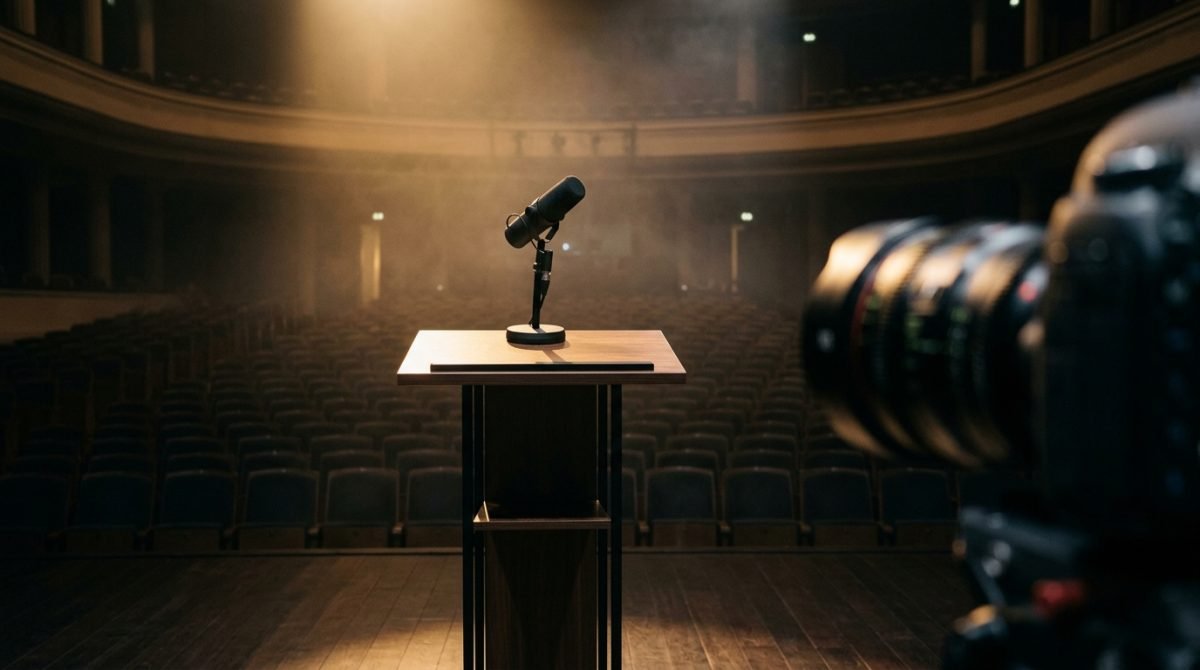
It is a Wednesday autumn morning. The guest sits in the chair, the red light turns on, and he forgets the text he recited flawlessly in the office. Planning a corporate podcast for the new year is not just about choosing equipment, renting a space, or preparing a script. Above all, it is learning how to speak to the camera so the viewer wants to listen to us until the very end. Many managers assume that since they do well in board meetings, it will be similar in front of the lens. However, the camera ruthlessly verifies our habits. The recording time of the first episode depends directly on your skills. The better you control your voice and body, the fewer retakes the producer needs.
Before you stand in front of people
Before you stand in front of people—even if they are viewers on the other side of the lens, investors at a pitch, or a committee at a defense—you must master the basics. In the studio, I often see directors or experts trying to improvise, hoping they will somehow pull the topic off. Regardless of whether it is a job interview or a podcast recording, a lack of structure rarely works in the long run. Preparing to record a video podcast requires a specific plan and awareness of your own body.
- Build a precise outline. Do not write full sentences, because you will start reading them from memory, and that always sounds artificial. Write down only keywords and main points that will guide you through the episode.
- Control your breath before starting. Stress makes your breathing shallow, which makes your voice squeaky. Take a few deep diaphragmatic breaths before you turn on the recording.
- Establish the lens axis and stick to it. Decide whether you are speaking directly to the viewer or having a conversation with a guest sitting next to you. Your eyes cannot wander around the walls looking for rescue.
- Do a home voice and video rehearsal. Record a one-minute test on your phone. Check if your pace is not too fast and if your posture expresses calm.
- Prepare your speech apparatus. Warm up your lips and tongue. Clear diction means the listener does not have to guess your words.
Step by step: how to speak to the camera in a corporate podcast
When we turn on the recording, full focus on the message is what counts. You wonder how to speak to the camera to appear natural and credible. The answer lies in treating the equipment like a living person. The lens is your listener's eye. Look into it exactly as you look at a conversation partner across the table during important negotiations.
Start with a conscious pause. Before you say the first word, take a calm breath. Give yourself a second to settle into the frame. Many people start speaking a fraction of a second after the producer's cue, which makes them swallow the first syllables and run out of breath. That second of silence builds your authority.
Watch your sentence stress. In Polish, the word carrying the main meaning usually falls at the very end. When you talk about company results or plans for the new year, do not stress conjunctions or pronouns. Focus on numbers and facts. Your voice should naturally drop down at the period. This gives a sense of confidence, closes the thought, and allows the listener to digest the information.
If you plan to record the entire first season, remember to have the right energy level. The camera steals about thirty percent of our expression. What attracts attention in a small conference room through quick hand movements and variable intonation becomes monotonous on a flat screen. You have to put a little more engagement into your voice and gestures. It is not about fake smiles, but about an internal conviction in what you are saying.
Most common mistakes
On set, I regularly see repeating patterns that are fortunately easy to eliminate if you know what to pay attention to.
The first mistake is looking away. When you are searching for a thought or recalling data, you automatically look at the ceiling or the floor. For the viewer, this is a sign of uncertainty. The fix is simple. Suspend your voice, take a pause, but maintain firm eye contact with the lens. Silence on camera works in your favor, as long as your eyes remain focused on the recipient.
The second mistake is stiffening your body. You sit on pins and needles, your shoulders travel toward your ears, blocking the free work of your diaphragm. Your voice then becomes flat. The fix involves changing your posture. Sit comfortably, rest your feet flat on the ground. Free your hands, let them naturally emphasize what you are saying. Gesturing helps maintain the right rhythm of speech.
The third mistake is speaking too fast. Out of nerves, you want to finish the recording as quickly as possible and return to your duties. The fix requires conscious braking. Slow down by half. What seems unnaturally slow to you is simply clear and understandable to the viewer. Fast speaking reveals stress, slow speaking builds expert status.
The fourth mistake is the lack of a period at the end of a sentence. Many people finish a thought with their voice raised, which sounds like constantly asking questions. The fix is working with intonation. Consciously lower your tone at the end of every important sentence so the period can fully resonate.
How to practice this
Practice makes a difference, and you can start working on your skills in your own home. Write down a simple plan for the upcoming week. On Monday and Tuesday, record two-minute summaries of your workday on your phone. Set the camera at eye level and speak straight into the lens. On Wednesday and Thursday, listen to these recordings, paying attention only to the pace, pauses, and where your eyes wander. On Friday, try to record the same material again, deliberately slowing down and taking a longer break between sentences. You will see how much the perception of you changes.
Home exercises provide a solid base and allow you to get used to your own image. However, there comes a moment when training in a professional studio makes a difference. During meetings with me in Warsaw, we work in production conditions. We have three cameras, studio lighting, broadcast microphones, and a teleprompter at our disposal. We record your material right at the start, analyze it sentence by sentence, and then repeat the shots until you start feeling completely comfortable. Such immediate feedback allows you to quickly correct habits that you will not notice in the comfort of your home. The participant always takes their recordings with them to see real progress.
Producing the first season of a podcast is a process that requires patience and a methodical approach. Good skills will make each subsequent recording take less time, and you will gain peace of mind in front of the lens.
Questions and answers
How long does it take to record one video podcast episode?
It all depends on your preparation and skills. Usually, recording a thirty-minute episode takes about an hour in the studio, including lighting setup and possible retakes.
Do I have to memorize the script for a corporate podcast?
I strongly advise against this because reciting sounds artificial and stiffens the body. It is best to prepare an outline in the form of bullet points and keywords that will guide your speech.
How do I handle stress before the camera turns on?
The key is working with your breath and properly settling your body in the chair. A few deep diaphragmatic breaths and a conscious pause before the first word help control your nerves.