Year-End Review: How to Speak to the Camera and Record in a Studio
Year-end board reviews are approaching. Learn how to speak to the camera naturally and discover daily diction and posture exercises to prepare.
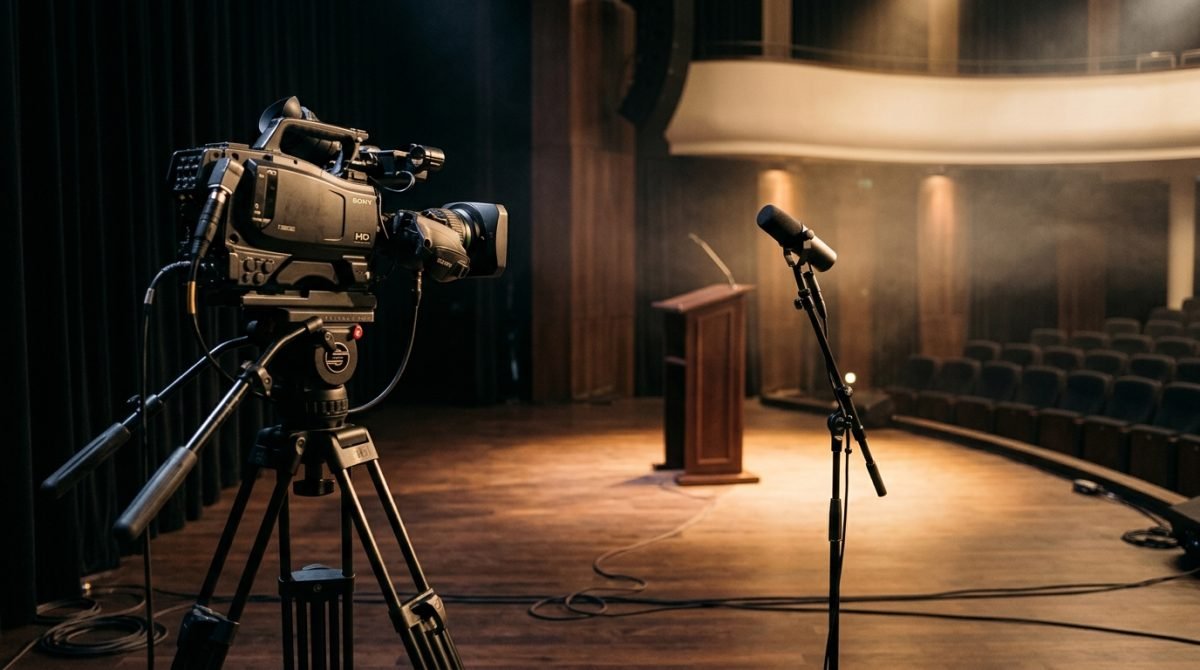
It is Sunday, a cool autumn afternoon. In a moment, invitations for year-end reviews will appear in the calendars of boards and teams. You walk into a conference room or a recording studio, the red light on the camera turns on, and a sudden dryness appears in your throat. The ease with which you were just talking in the hallway disappears. This is the body's natural reaction to stress and exposure. The key to mastering this situation is knowing how to speak to the camera and technically structuring your text.
Before you stand in front of people
Before you stand in front of people, you need to know exactly what you want to tell them. A presentation with financial results or slides is just an addition to you. Written text in a text document differs drastically from what we say out loud. Long, complex sentences with participles work well in an official email, but in front of the lens, they take away your breath and lose their meaning.
- Build a structure based on short, single messages.
- Read your text out loud in the room and mark the places where you run out of breath with a pen.
- Divide overly long thoughts into two or three separate sentences.
- Throw out difficult, bureaucratic words that you stumble over during out-loud rehearsals.
- Prepare notes in the form of bullet points or sentence fragments, not full paragraphs.
- Consider where to place the sentence stress, meaning which word in a given sentence carries the most important information.
How to speak to the camera: master the frame and your breath
The lens is not dead, cold glass. In a television studio, I always imagine that a specific person is sitting on the other side of the lens. When you look exactly into the axis of the lens, you establish direct eye contact with the viewer on the other side of the screen.
Start with your body posture. Rest your feet firmly on the ground, hip-width apart. This provides physical support for the diaphragm. When you stand confidently, your breath lengthens, and your voice sounds lower and calmer. Do not lock your knees; leave them a minimal amount of slack, which will prevent your legs from shaking.
Keep your hands around your waist, ideally in an open clasp. Let them work in the natural rhythm of your words. Avoid wide, sweeping gestures that go outside the frame. The camera likes economy of movement. If you are sitting, rest your forearms on the tabletop, leaning slightly toward the lens. This is a signal of engagement.
The most common mistakes
I see this regularly on set. Someone steps in front of the lens, stands in the light of the lamps, and suddenly turns into a completely different person.
Lack of pauses. You start speaking and try to throw out a whole slide of data on a single breath. You lead yourself to shortness of breath. Correction: after every important thought, after giving a key result, take a second or two of a break. Give the viewer time to process this data.
Wandering eyes around the studio. You look for missing words on the ceiling, the floor, or the preview monitor. Correction: if you lose your train of thought, just stop. Take a calm breath, arrange the thought in your head, but do not let your eyes escape from the axis of the lens.
Stiff neck and locked chest. You stiffen your shoulders, which can immediately be heard in a tight, higher voice. Correction: right before stepping onto the set, do a few slow backward arm circles and relax your neck.
How to practice this
Camera skills simply require time and repetition. Plan a simple, at-home workout for this week.
On Monday, take your phone, place it on a tripod at eye level, and record a minute of your year-end review speech. On Tuesday, watch this footage without sound. Pay attention only to what your hands, shoulders, and eyes are doing. On Wednesday, listen to the sound alone, placing the screen face down. Catch the places where you speed up the pace or lose your breath. On Thursday, record the same fragment again, introducing just one specific correction from the previous days. On Friday, compare both recordings and draw conclusions.
At-home rehearsals in front of a phone provide a solid foundation. When you feel that you need to work on professional equipment and an external, objective eye, I invite you to train with me. In a working Warsaw studio, we record your material, analyze it sentence by sentence on a large screen, and repeat the takes until they start coming out naturally.
Working in front of the camera is a specific craft based on repetition and technique. The more conscious attempts you make, the calmer your breath will be after hearing the command "action."
Questions and answers
Do I have to memorize the text before recording?
No, memorizing it word for word leads to sounding artificial and panicking if you forget a single word. It is better to master the structure of the speech and transition smoothly between key points.
What should I do with my hands when speaking to the camera?
Keep your hands relaxed around your waist and let them naturally emphasize your words. Avoid putting them in your pockets or crossing them over your chest.
How do I deal with a dry throat before a speech?
Drink still water at room temperature a dozen or so minutes before stepping in front of the lens. Avoid coffee and strong tea, which further dry out the mucous membrane.