Board Q&A: Public Speaking and Practice at Home
How to master the Q&A after a results presentation. Discover public speaking exercises and techniques to prepare for tough questions from the board.
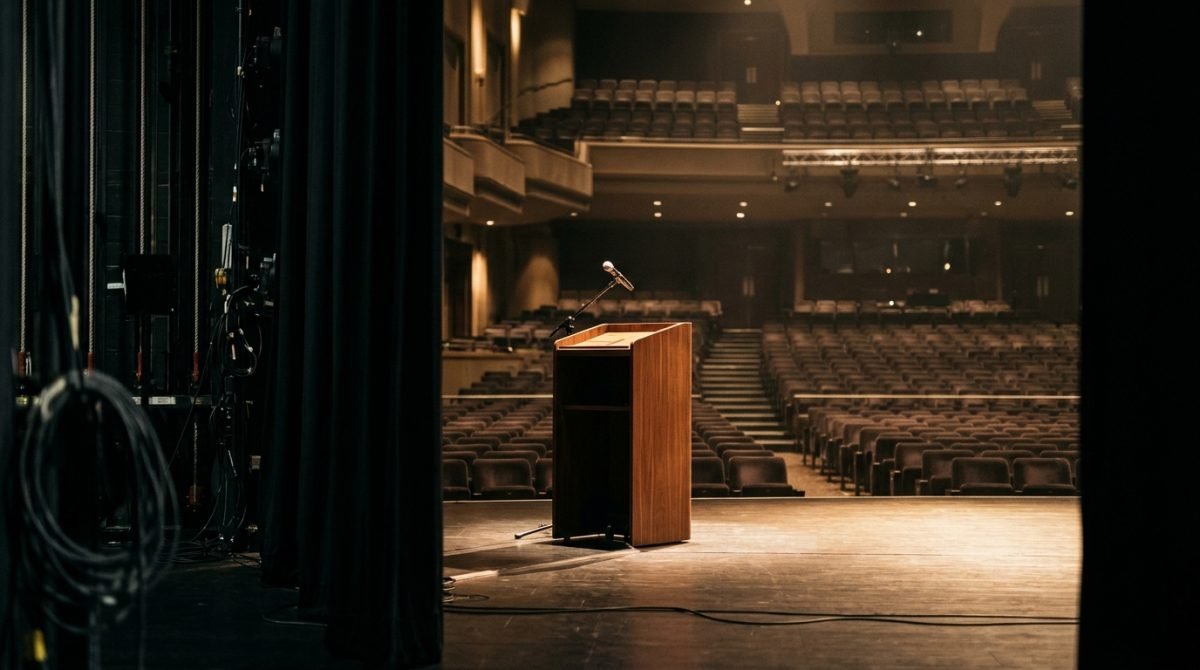
Monday morning, autumn outside the window, and the last slide with the word "questions" hangs on the screen in the conference room. Board members look up from their printed reports, and you feel a sudden dryness in your throat. Annual reviews are approaching, so there will be many more scenes like this in companies now. The answer to this moment is not innate talent, but craftsmanship and proper public speaking, specifically the exercises you do long before entering the room. The Q&A session is not an add-on to a results presentation. It is very often the most important part of the meeting. This is when you defend your data, show your way of thinking, and prove that you are in control of the situation. The board rarely asks questions to prove you wrong. They ask because they are looking for specific information needed to make strategic decisions.
Before you stand in front of people
Preparation for a Q&A session starts during the writing phase of the presentation itself. I often see this on set when I work on texts with my interviewees. The speaker puts together a smooth story, forgetting that hard numbers always raise doubts. A good speaker anticipates these doubts and prepares for them in the comfort of their home, even before turning on the projector.
- List the data gaps. Think about what is missing from the slides and what the CFO is sure to ask about. There is always a weak point you prefer not to mention in public. That will be the subject of the first question.
- Prepare backup slides. Hidden slides with additional tables, charts, or detailed cost estimates are your safety buffer. Pulling them out at the right moment builds authority and shows you did your homework.
- Develop communication bridges. These are short sentences that allow you to transition smoothly from an uncomfortable question to the point you want to defend. Phrases like "referring to this aspect, let's look at it from the perspective of the whole year" give you time to gather your thoughts.
- Do a dry run with an outsider. Ask a coworker to listen to your conclusions and ask the three most malicious questions that come to mind. Answer them out loud without looking at your notes.
Public speaking: exercises for handling pressure
When a tough question is asked, the body reacts with tension. Breathing becomes shallow, shoulders go up, and the voice retreats to the throat, becoming thin and uncertain. You can control this if you implement the right physical habits.
Step one is a conscious pause. When you hear a question, do not answer immediately. Take a calm breath through your nose, directing the air low, to your diaphragm. This gives you a second to organize your thoughts and physiologically lowers your heart rate. Silence before an answer shows your composure.
Step two is eye contact. Look into the eyes of the person who asked the question, but sweep your gaze across the entire room during a longer explanation. Finish your answer by returning your gaze to the questioner. This builds your position and shows that you are not closing yourself off defensively against one board member.
Step three is the structure of the answer. Instead of dodging and searching for arguments while speaking, use a simple framework. First, confirm understanding, then give a specific answer, and finally a short justification. For example, you say you understand the concerns about costs in the third quarter, add that they were reduced by ten percent, and finally explain that this results from supply chain optimization. Always end with a period, lowering the tone of your voice at the end of the sentence.
Most common mistakes
When working with a camera, habits that destroy a speaker's credibility quickly come out. Under stress, the body looks for an outlet for tension, and we stop controlling non-verbal communication.
Looking away at the ceiling. When you search for an answer, your eyes instinctively wander up or roam the walls. To the audience, this is a sign of uncertainty or looking for excuses. The fix is to lower your gaze to your notes or the tabletop. Once you gather your thoughts and start speaking, return your gaze straight to the person you are talking to.
Rambling and over-explaining. Instead of one strong argument, you provide five weak ones, hoping that one will eventually work. This dilutes your message. The fix is simple in theory but difficult in practice. End with a period. Say what you have to say and fall silent. Silence works in your favor, giving the board time to digest the data.
Aggressive body posture. Crossing your arms over your chest, leaning back in your chair, or closing your chest builds a wall. The fix is an open posture. Rest your forearms on the table, keep your hands in sight, and lean slightly toward the questioner.
Pretending you know the answer. Making up data on the spot or guessing always ends badly. The board will quickly catch the inaccuracies. The fix is honesty. Say directly that you need to check that specific metric and will get back with a precise answer in an email right after the meeting.
How to practice this
Craftsmanship requires repetition. You will not learn to swim from a book, just as you will not master a difficult Q&A without speaking out loud. Write down a simple plan for the week before an important presentation.
On Monday and Tuesday, record your answers on your phone. Set the frame so you can see your face, shoulders, and chest. Answer the toughest questions from your list. Then play the recording without sound. Observe what your body does when you are at a loss for words. You will see every nervous hand movement and wandering gaze.
On Wednesday and Thursday, practice the pause. Ask someone close to you to ask questions from your industry. Before you open your mouth, count to three in your head. You will see how long this silence seems to you, and how natural and thoughtful it is to the listener.
On Friday, do a dress rehearsal in the clothes you will wear. Sometimes home training is enough to gain confidence. However, if you feel that stress still paralyzes your voice and your body does not obey commands, then it is worth considering studio training. Working with three cameras, a broadcast microphone, and a director on set allows you to see yourself from a completely different perspective. I then analyze such material with the participant sentence by sentence, and we repeat takes until the body and voice start fully cooperating.
Tough questions from the board are not a personal attack, but a test of your preparation and knowledge of the subject. Solid craftsmanship, controlled breathing, and a conscious pause will allow you to get through this stage calmly and to the point.
Questions and answers
Do I need to know the answer to every board question?
No. If you lack specific data, say so openly and promise to send the details after the meeting. Guessing always destroys a speaker's credibility.
How do I deal with a shaky voice during a Q&A?
A shaky voice comes from shallow breathing and chest tension. Before you answer, take a conscious pause and breathe deeply through your nose, directing the air to your diaphragm.
What should I do if a board member interrupts my answer?
Stop and listen to the new thought until the end. Then calmly return to your argument using a short communication bridge, for example, by referring to the point that was just interrupted.