Stage Fright Before a Speech: How to Manage It Step by Step
Fall board presentations cause stress. Learn how to manage stage fright on camera and on stage with specific breathing and vocal exercises.
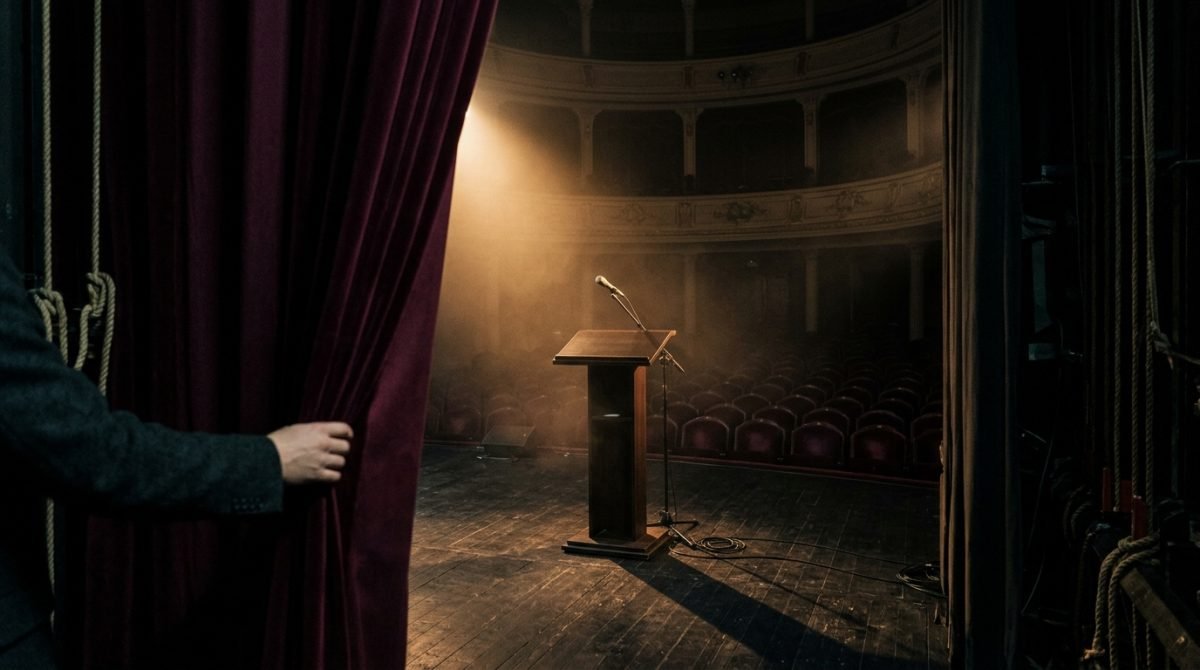
Wednesday morning, typical fall outside the window. Soon, annual summaries, board presentations, and key client meetings will begin. You walk into a conference room or see the red light on the lens, and suddenly you are out of breath. Your throat tightens, and your hands get cold. You wonder how to manage stage fright so your voice doesn't tremble and your thoughts form logical, coherent sentences. The answer is simple, though it requires systematic work. We do not get rid of stage fright, because it is the body's natural reaction to exposure. We turn stage fright into concentration, which helps convey the message precisely.
Before you stand in front of people
Preparation is the foundation that holds the entire structure of a speech together. I see this regularly on set and during studio training. Someone steps in front of the lens with a perfectly prepared presentation in a graphics program, but they are seeing their own text for the first time. They start reading from memory and lose their rhythm. Their voice becomes flat, they run out of breath, and panic appears in their eyes. To avoid this, you must prepare your speech apparatus and body long before stepping on stage.
- Write your text the way you speak, using short sentences and avoiding corporate jargon that twists your tongue.
- Read the whole thing out loud at home, marking places to take a breath with a pen.
- Record your first attempt on your phone and listen to where you speed up out of nerves.
- Memorize the first two sentences so you can enter the topic smoothly without looking at your notes.
- Check your equipment, framing, and lighting setup if you are connecting with your audience remotely.
Step by step: how to manage stage fright in your body and voice
Physiological stress manifests as shallow breathing and muscle tension. When we run the Public Speaking Workshop: message structure, opening, punchline, managing stage fright, we always start with an initial recording. I watch closely what happens to the speaker's body. Shoulders go up, feet lift off the floor, and the posture collapses inward. All of this blocks the diaphragm and makes the voice shallow.
The first step to controlling the situation is grounding. Stand on both legs, spreading them hip-width apart. Feel the weight of your body on your feet. This provides physical stability, which immediately translates into vocal confidence. Do not cross your legs or shift your weight from foot to foot.
The second step is diaphragmatic breathing. Place your hand on your stomach. On the inhale, your stomach should rise, making room for your lungs, and on the exhale, it should fall calmly. Take a few steady breaths like this before stepping on stage or turning on the camera. This mechanically lowers your heart rate.
The third element is conscious eye contact. In a room, pick one person and say a full sentence to them. Then shift your gaze to someone else and give them the next thought. On camera, the lens axis is your viewer. Look exactly into the lens, not at the preview of your face on the computer monitor. Focusing your eyes on one point builds a connection with the audience and effectively distracts you from your own tension.
Most common mistakes
Mistake one is holding your breath right before your first word. You wait for a cue from the director or a nod from the CEO, tense your chest, and start speaking on the remaining air. Your voice becomes squeaky and uncertain. The fix is to take a calm diaphragmatic breath right before you start. You release the air along with the first word you speak.
Mistake two is looking up at the ceiling while searching for a fleeting thought. The viewer perceives this as a lack of competence or uncertainty. When you are missing a word, simply pause. Suspend your voice, look into the eyes of your interlocutor or straight into the lens. Silence is much better than nervously looking around the corners of the room.
Mistake three is excessive gesturing that does not support the conveyed message in any way. Aimlessly waving your hands distracts the audience. Instead, rest your hands comfortably at waist level. Use gestures only when you want to emphasize specific information, for example, when listing points or showing the scale of a problem.
Mistake four is speaking entire paragraphs on a single breath. You want to finish your speech as quickly as possible, so you swallow the endings of words and speed up your pace. The solution is to place clear periods at the end of your sentences. A period is your moment to draw breath and position your speech apparatus for the next phrase.
Mistake five is stiffening your neck and jaw. Stress accumulates in the neck area, which causes your throat to tighten. The sound has no space to resonate. The fix is a simple relaxation exercise before going on. Move your jaw from side to side, swallow deeply a few times, and gently massage your neck. This physically releases tension from your speech apparatus.
How to practice this
Training makes a difference only when it is regular and structured. You can start working at home, without professional equipment. Plan six days of work on one short presentation text.
On Monday, write a three-minute speech on a topic you know well. Record it on your phone, not worrying about initial mistakes. On Tuesday, analyze that recording. Pay attention to your speaking pace and the moments where you clearly run out of breath. On Wednesday, practice just the opening. Say the first three sentences ten times, each time ensuring a calm breath and constant eye contact with the phone lens.
On Thursday, focus on pauses and sentence accents. Read the text out loud, taking conscious, two-second breaks after every important sentence. Let the key information resonate. On Friday, do a full recording and compare it with Monday's. You will see a clear difference in the stability of your voice, posture, and overall composure.
On Saturday, do a test under high-stress conditions. Ask someone in your household to sit across from you and just listen without interrupting. Deliver your three minutes while maintaining eye contact with them. You will see how the presence of another person changes your heart rate and breathing rhythm. This is an excellent proving ground before the real stage.
Independent work provides a solid foundation and allows you to eliminate basic mistakes. However, there comes a time when home methods are not enough, and the lack of an objective perspective hinders progress. Training in a working production studio in Warsaw verifies habits in conditions similar to television. Three cameras, strong studio lighting, broadcast microphones, and a teleprompter expose every mistake, but also allow you to correct it immediately. We work using the method of recording, cold analysis of the material sentence by sentence, and another attempt, until we get it right. I accept applications through the form at karolgnat.pl/szkolenia, where I personally answer every inquiry.
Conscious control over your body and voice is a craft, not an innate talent. It requires time, hundreds of repetitions, and a cold analysis of your own mistakes in front of the lens.
Questions and answers
Is it possible to completely eliminate stress before a speech?
No, the body's physiological reaction will always appear. The key is to turn paralyzing stress into concentration through breath and posture control.
What should I do when my throat gets dry while speaking to the camera?
Take a conscious pause and swallow, without looking away from the lens. A moment of silence works to your advantage and builds authority.
How do I prepare for an important online conversation at home?
Set the camera lens exactly at your eye level and make sure your feet are firmly planted on the floor. This forces a straight posture and makes diaphragmatic breathing easier.