Video Onboarding: How to Speak to the Camera at Work
Creating video onboarding for employees? Find out how to speak to the camera to keep your team's attention. Learn specific voice and body techniques.
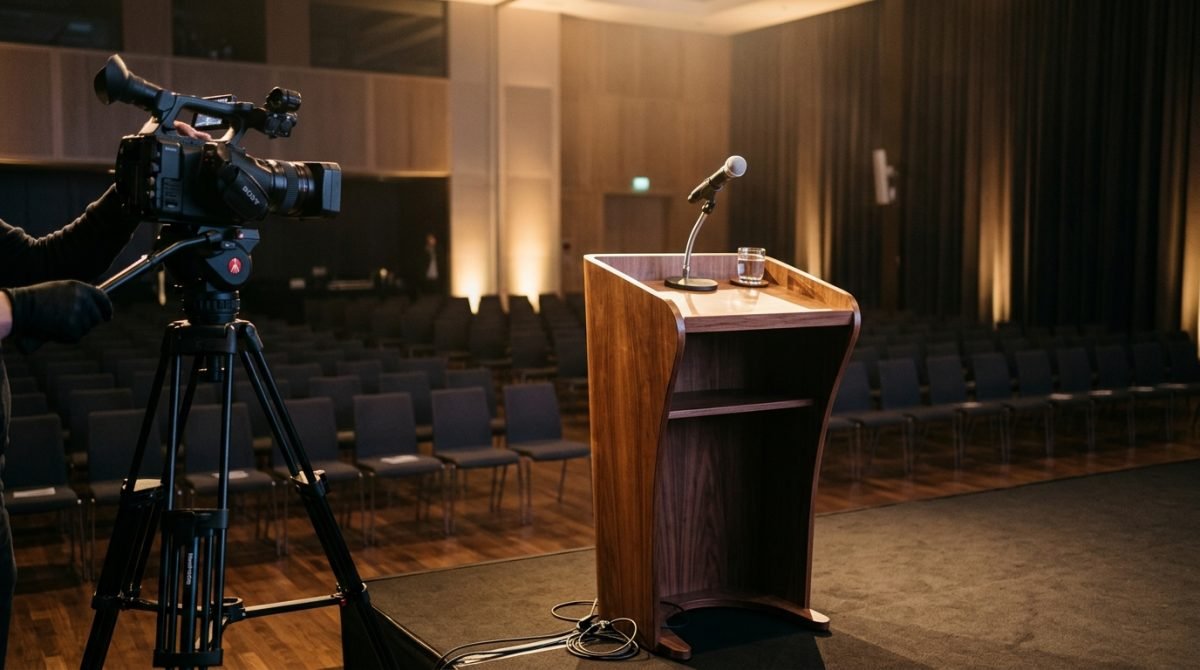
It is Friday afternoon, early fall outside the window, and you sit down to record a welcome message for new employees. You wonder how to speak to the camera so that the video onboarding is not just another boring video to click through. The answer comes down to treating the lens like a real person, not a glass eye.
Before you stand in front of people
The camera exposes a lack of preparation. I see this often on set when the presenter tries to come up with content while speaking or resorts to reading from a piece of paper. Before you hit record, you need to organize your structure. A new employee needs specifics, not a stream of consciousness. Working in front of the lens requires conscious management of your energy, space, and text. Writing for speech is a completely different discipline than writing a company email. Short sentences work best here.
- Write your script in bullet points instead of full sentences, because reading from a screen flattens your intonation and kills naturalness.
- Define one main goal for the material, thinking about what the viewer should remember after turning off the player.
- Prepare the space in the frame, making sure the background does not distract from your face.
- Warm up your vocal apparatus using a few deep diaphragmatic breaths and a gentle jaw massage.
Step by step: how to speak to the camera during recording
When the red light on the camera turns on, many people stiffen up. Breathing becomes shallow, shoulders go up, and eyes start wandering around the room. This is the body's natural reaction to the stress of exposure. The key to speaking to the camera is getting comfortable with the space and consciously working with your body. The axis of the lens is your only point of contact with the new team member.
Look straight into the center of the lens. This is the only way for the viewer to feel eye contact. If you are recording with a phone, locate the small camera dot and direct your eyes there, not at the preview of your face on the screen. Darting your eyes to the preview monitor is a common habit that instantly destroys the connection with the audience. Imagine that inside this small lens sits a specific person to whom you are explaining how to log into the system.
Maintain an even speaking pace. Stress speeds up speech and makes breathing shallow. Make clear pauses at the ends of sentences. A pause gives you time to take a breath, and the new employee time to process information about complex procedures. Using sentence stress on key words helps keep the listener's attention for a longer time. Do not be afraid of silence in the frame.
Use natural gestures. Your hands should work to support what you are saying. However, avoid sudden movements that will blur the image or cover your face. Rest your hands at waist level and let them freely follow the rhythm of your spoken sentences. Your posture should be open, and your body weight evenly distributed on both feet. Shifting from foot to foot reveals nervousness.
Most common mistakes
During my studio training sessions, I often observe the same patterns. People want to come off as professional, and as a result, they lose authenticity and build unnecessary distance.
The first mistake is the announcer syndrome. A stiff posture and an artificially lowered, radio-like voice make you sound like a machine reading the rules. The fix is to return to your own natural sound. Speak as if you were explaining office rules to a colleague at the next desk. Authenticity builds trust faster than perfect but cold diction.
The second mistake is wandering eyes. Darting your eyes to the sides or the ceiling in search of a thought makes you lose the viewer's attention. If you lose your train of thought, just stop. Look at your notes lying out of frame, bring your eyes back to the lens axis, and only then start speaking. In video, you can always make a cut during editing. You do not have to record the entire training in one take.
The third mistake is forgetting to breathe. Short, choppy chest breaths increase stress and tighten the throat, making the voice squeaky. The fix is to consciously shift your breathing to your diaphragm. A long exhale calms the nervous system and stabilizes the sound. Before you say your first word, take a calm breath into your lower ribs.
How to practice this
Theory needs to be put into practice. I suggest a simple plan for the upcoming week that you can do at home using a regular smartphone.
On Monday and Tuesday, record yourself with your phone for a minute a day. Talk about what you did at work. Focus solely on keeping your eyes on the lens. Ignore diction, pace, and content for now. Your only task is to not take your eyes off the camera lens.
On Wednesday and Thursday, add working with pauses. Record another minute, but take a full one-second break after every sentence. You will see on the recording how much this organizes your speech and calms your pace. It also provides space for a free, silent breath.
On Friday, record a test fragment of your onboarding. Watch the footage without sound, evaluating your body language and eye contact. Then listen to the audio alone, checking your pace and intonation. This will allow you to catch habits you do not notice while speaking.
Working independently with a phone builds a foundation and gets you used to your own image. However, there comes a time when home methods are not enough. That is when training with me in a working production studio, with professional lighting, a teleprompter, and sentence-by-sentence recording analysis, makes a real difference in the quality of your appearances.
The camera is just a tool for passing on knowledge, not a judge of your competence. Mastering the craft allows you to focus on what you have to say to your new team.
Questions and answers
Do I have to memorize the onboarding script?
No, memorizing leads to an unnatural sound and increases stress. It is better to prepare a bulleted structure and speak in your own words.
What should I do if my throat gets dry during recording?
Just stop the take and drink some room-temperature still water. Video onboarding is a format that we edit together from smaller clips.
How do I handle stress before turning on the camera?
Focus on a long exhale and consciously relaxing your shoulders. Treat the lens like one specific listener you want to help settle into a new job.