B2B Video Offer: How to Speak to the Camera to Sound Confident
Recording a B2B video offer and don't know how to speak to the camera? See practical voice and posture exercises that will help you sound natural.
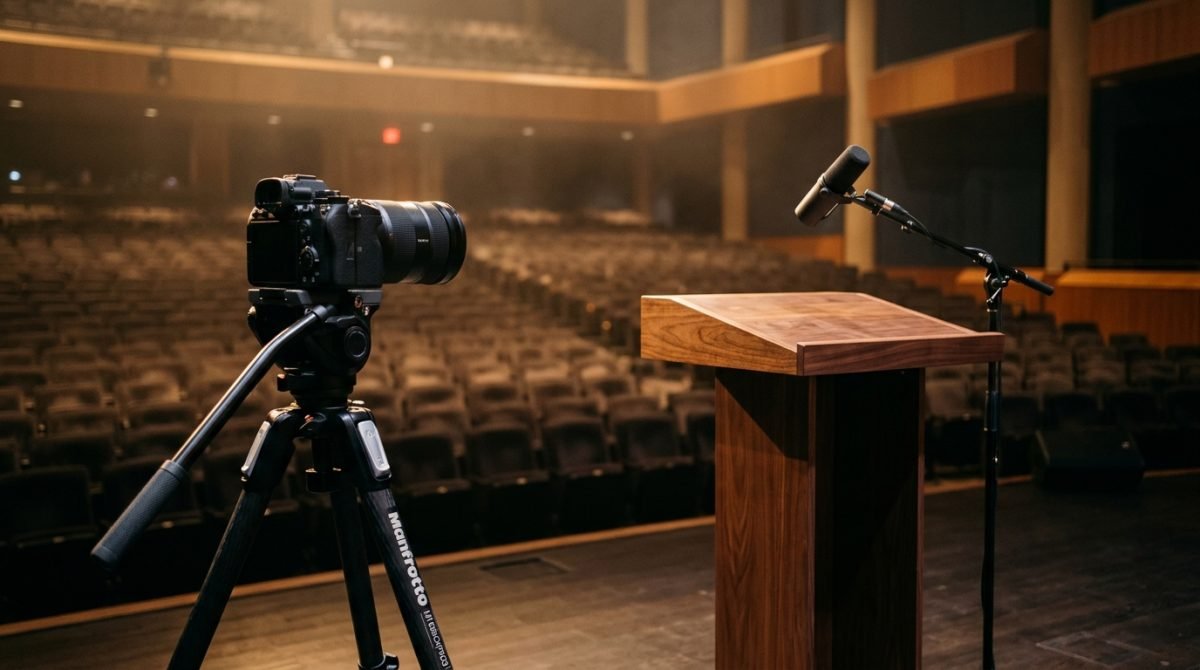
A Monday autumn morning is the moment when email inboxes fill up with offers. I see it myself, and I know that dry text is increasingly losing to a well-recorded video. You are wondering how to speak to the camera so that the viewer on the other side watches the material to the end. The answer comes down to craftsmanship. It is a matter of mastering your breath, gaze, and pace, not an innate gift. On a television set, no one is born with a ready-made ability to speak to the lens. Everything you see on the screen is the result of repetitive exercises and body awareness. When you record an offer for business, your message must be clear, and the form cannot distract from the content.
Before you stand in front of people
Before you hit record and send the file out into the world, you must prepare your speech apparatus and your mind. On a film set, no one steps in front of the lens without preparation. I see this every day working in the studio. Even experienced presenters need a moment to warm up. A B2B video offer is your stage, and the camera does not forgive a tense body. Tension accumulates in the neck, shoulders, and jaw. If you do not relax this, your voice will be flat and your posture stiff. Preparing your space and body is the foundation on which you build your entire presentation.
- Relax your jaw and neck by doing a few slow head rotations in both directions.
- Take five deep diaphragmatic breaths, directing the air into your lower ribs.
- Read your text out loud, marking places to take a breath with a pencil.
- Set up the frame so that the lens is exactly at your eye level.
- Ensure your face is lit by positioning yourself facing a window or a lamp.
These are simple steps you can do in any office or room. When the body knows it has support in the breath, stress begins to drop.
Practical steps, or how to speak to the camera
When the red light turns on, the body can freeze. This is a natural physical reaction to the glass of the lens. Knowing how to speak to the camera relies on slightly tricking the brain. You must treat this piece of plastic and glass like a real person. Imagine a specific client you talked to last week over coffee.
Focus your gaze right in the center of the lens. Do not let your eyes wander to the sides, and do not look at the preview of your face on the phone screen or monitor. That is the fastest way to lose contact with the viewer. When you look exactly into the lens axis, your recipient feels that you are speaking directly to them. In television, we call this breaking through the glass screen.
The next step is managing your pace. Stress physiologically speeds up speech. We start swallowing word endings, losing meaning, and blending sentences into one mass. Slow down. Make pauses between key thoughts. A pause gives the viewer time to process the information, and it gives you a fraction of a second for a calm breath. Silence in a video is just as important as words.
If the offer text is long and full of data, technology comes to the rescue. In my studio in Warsaw, we often practice reading from a teleprompter: sentence stress, pause, interpretation - you sound like yourself. However, this tool requires solid training. Your eyes cannot chase the text from left to right, and your voice must maintain a natural melody. Once you master this art, recording longer formats simply becomes an efficient production process.
Most common mistakes
From the training room and the analysis of my students' recordings, I catch repetitive patterns. The body and voice always reveal a lack of technical preparation.
The first mistake is wandering eyes. Letting your eyes escape to the ceiling while searching for words makes you lose credibility in the eyes of a business partner. The fix is simple. If you forget the text, stop, take a breath, look back into the lens, and only then resume speaking. During the editing stage, you can easily cut out clean silence.
The second mistake is shallow clavicular breathing. It causes your shoulders to rise, your voice becomes squeaky, and you quickly run out of air mid-sentence. The fix involves moving the breath lower, to the stomach. Feel your lower ribs expand as you inhale. Your voice will immediately gain depth and resonance.
The third mistake is not stressing important words. Monotony puts the viewer to sleep in a matter of seconds. The fix requires working with the text. Choose one word in each sentence that carries the most important information. Say it slightly slower and with minimally more force.
The fourth mistake is bad posture. A sunken chest and dropped shoulders drain your energy. The fix starts from the feet. Rest your body weight evenly on both legs, pull the top of your head toward the ceiling, and gently pull your shoulder blades together.
How to practice this
Craftsmanship requires repetition. I propose a simple plan for the coming week. You can do it at home, using only a smartphone and a tripod.
On Monday and Tuesday, focus solely on your gaze. Hit record and talk for a minute about what you did over the weekend. Your only task is not to take your eyes off the phone lens. Watch the material and check if your eyes wandered to the sides. Pay attention to whether you are blinking too often out of nerves.
On Wednesday and Thursday, add work on your pace. Take a short fragment of your video offer. Read it out loud, intentionally slowing down the pace by half. Make clear, two-second pauses after each sentence. Record this process. You will see that what seemed unnaturally slow to you while speaking sounds simply calm and confident on the recording.
On Friday, combine both things. Record the entire offer. Focus on the lens axis and a calm, low breath. Watch the result. If you see progress, you are on the right track to mastering the basics on your own. If you feel you need an outside eye, professional equipment, and sentence-by-sentence work on the material, then studio training makes a difference. A camera with a teleprompter and a broadcast microphone expose shortcomings, but they also allow you to correct them quickly.
On-camera work is a craft that yields to regular training. Every recorded and analyzed minute brings you closer to technical fluency.
Questions and answers
Where should you look when recording a video offer?
Always look straight into the lens axis. Avoid glancing at the screen preview, as this destroys eye contact with the viewer.
How do you handle stress in front of the camera?
Focus on deep diaphragmatic breathing before starting the recording. Treat the lens like a real person you are having a normal conversation with.
Is it worth using a teleprompter for B2B offers?
Yes, if the text is long and contains detailed data. However, this requires prior training to maintain a natural voice melody and appropriate pace.