YouTube: How to Start Speaking to the Camera and Batch Record
Wondering how to start speaking to the camera and batch record YouTube videos in one day? Discover specific steps and voice techniques to get started.
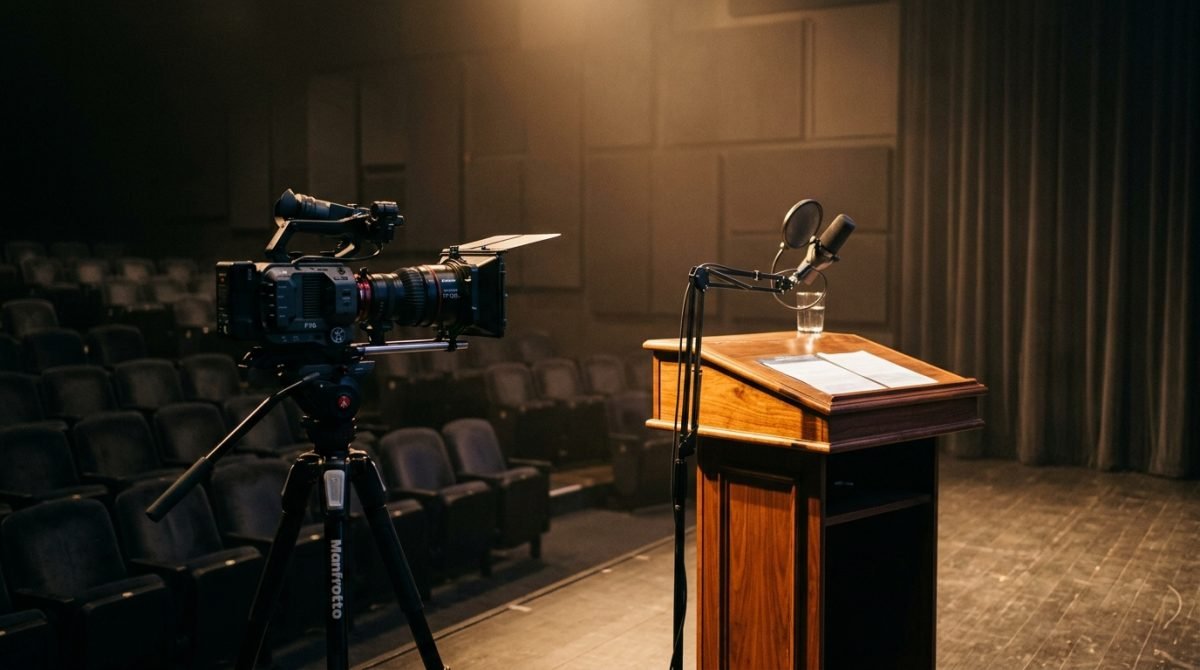
Tuesday morning, typical gray autumn weather outside, and in the studio, the lights are already precisely aimed at the face of a person who is about to record eight episodes of their format. I see clear tension in their shoulders and hear shallow breathing that cuts off mid-sentence during a simple microphone check. Stress in front of the glass of the lens is a physiological reaction of the body to an unnatural situation. If you are planning your YouTube debut and wondering how to start speaking, the answer comes down to one mechanism. You must prepare your scripts and your body so meticulously that in front of the lens you are only working with ready material, without frantically coming up with words on the fly.
Before you stand in front of people
Batch recording videos in one day requires iron discipline at the desk and keyboard stage. The camera ruthlessly exposes every lack of decision and split-second of hesitation. If you do not know how to finish a thought, you will start wandering your eyes around the ceiling and adding unnecessary thinking sounds that will destroy the editing dynamics. Writing out the text before entering the studio eliminates pauses for thought and allows for fluent speaking. Writing for speaking is different from creating a blog post.
- Write scripts tailored to your breathing. Sentences must be short, devoid of multiple complex structures. If you read the text out loud at home and run out of air, put a period much earlier.
- Divide the material into thematic blocks. Record videos in batches of three or four, maintaining the same energy rhythm and thematic consistency, which will make it easier for you to enter the right state of focus.
- Take care of wardrobe logistics. Prepare a change of clothes. Changing a shirt or jacket between episodes is a clear signal to the viewer that they are watching new material, and for you, it is a brief moment to physically reset your posture.
- Warm up your speech apparatus. Before you step onto the set and start recording, hum quietly with clenched lips, massage your jaw, and take a few deep belly breaths.
- Stay hydrated. Vocal cords need moisture to work properly. Drink still water at room temperature starting two hours before recording, avoiding coffee, which dries out the mucous membrane.
YouTube: How to start speaking and keep attention
On-camera work is a craft and technique that can be broken down into its basic parts. The foundation is your focal point. Your conversation partner is not the black camera body or the tripod, but the very center of the lens. That is exactly where your viewer's eye is located. When you look away to the sides, you break this invisible contact and lose the recipient's attention. Keeping your eyes on the axis of the lens requires practice, but it builds trust.
The next step is consciously setting your body in an active position. Rest your feet stably on the floor, distributing your weight evenly, and lean slightly toward the lens. This posture automatically opens your chest and provides the necessary space for your diaphragm to work. Your voice gains depth, and on camera, you look like someone genuinely engaged in what they are conveying. Slumped shoulders and a silhouette leaning against the back of a chair make your breathing shallow and drain your energy.
Speak to the camera slightly louder and more clearly than during a regular coffee chat with a friend. The glass of the lens and the physical distance absorb about twenty percent of your natural energy. You must make up for this with precise diction and stronger sentence stress. Highlight the words carrying the main meaning in a sentence by pausing for a fraction of a second before them. This gives your speech the right rhythm and helps the viewer process the information.
Most common mistakes
On set, I regularly observe the same patterns that ruin the reception of even a text saturated with hard data. You can eliminate them with a relatively simple but conscious correction.
The first mistake is speaking on the last bits of air. Instead of taking a deep breath into your stomach, you catch air with the tops of your lungs in the middle of a long sentence. The voice then becomes thin and dull, and the sentence ends in a squeak that is unpleasant to the ear. The solution is a conscious pause. Stop talking for a second, take a calm breath, and only then start a new thought.
The second mistake is the so-called dead stare. When you rely on reading from a teleprompter, your eyes might start mechanically tracking the text from the left to the right side of the mirror. The viewer will immediately notice this unnatural eyeball movement. Instead of reading single words, try to take in entire phrases with your eyes and look into the center of the lens, behind which the text is scrolling.
The third mistake is the lack of a smile at the beginning and end of the recording. An expressionless face in the first seconds of a video builds unnecessary distance. It is enough to gently raise the corners of your mouth before you say the first word of greeting. This physically relaxes your facial muscles and warms up the tone of your voice.
The fourth mistake is excessive gesturing, which distracts attention. Waving your hands close to your face or outside the edges of the frame introduces visual chaos. Keep your hands in the comfort zone, at the height of your lower chest, and use them only to emphasize the fragments carrying the main message of your speech.
How to practice this
I suggest a simple but rigorous plan for the coming week, which you can do at home without specialized equipment. On Monday and Tuesday, choose one short text, for example, a paragraph from an industry article. Turn on the recording on your phone, lean it against some books at eye level, and read the text out loud, looking straight into the lens. Focus solely on not looking away and diligently pausing at the periods.
On Wednesday and Thursday, watch the collected material right after recording. Pay attention to where you lose your breath, whether your face is too tense, and what your hands are doing. On Friday, repeat the same exercise, trying to improve one specific element from the previous days, for example, deepening your breath. On the weekend, do a longer rehearsal. Record three different intros to your planned videos in a row, simulating the conditions of a real shooting day. You will see how quickly your energy drops and where you need to work your diaphragm harder.
Working independently with a phone builds the habit of looking into the lens and allows you to get used to your own image. However, there comes a moment when home conditions are no longer enough to catch small nuances. That is when studio training makes a real difference. Working with a professional camera, proper lighting, and a teleprompter, combined with recording at the beginning and end, and feedback analyzed sentence by sentence with me on set, allows you to break habits that you simply do not notice yourself.
The camera does not require you to be someone else or to play roles. It only requires technical mastery of your body and voice so that your knowledge can break through the glass of the lens without obstacles.
Questions and answers
Do I have to memorize my scripts before recording?
There is no need for that. Bullet points or using a teleprompter work much better, provided you master the technique of reading in full phrases.
How long should the break be between recording episodes?
A few minutes to change your shirt, take a few deep breaths, and drink some water is enough. A break that is too long throws you off rhythm and lowers your energy level.
What should I do if I forget a word mid-sentence?
Stop, take a breath, and repeat the entire sentence from the beginning. You can easily cut out the mistake in editing while maintaining consistent intonation and speaking rhythm.